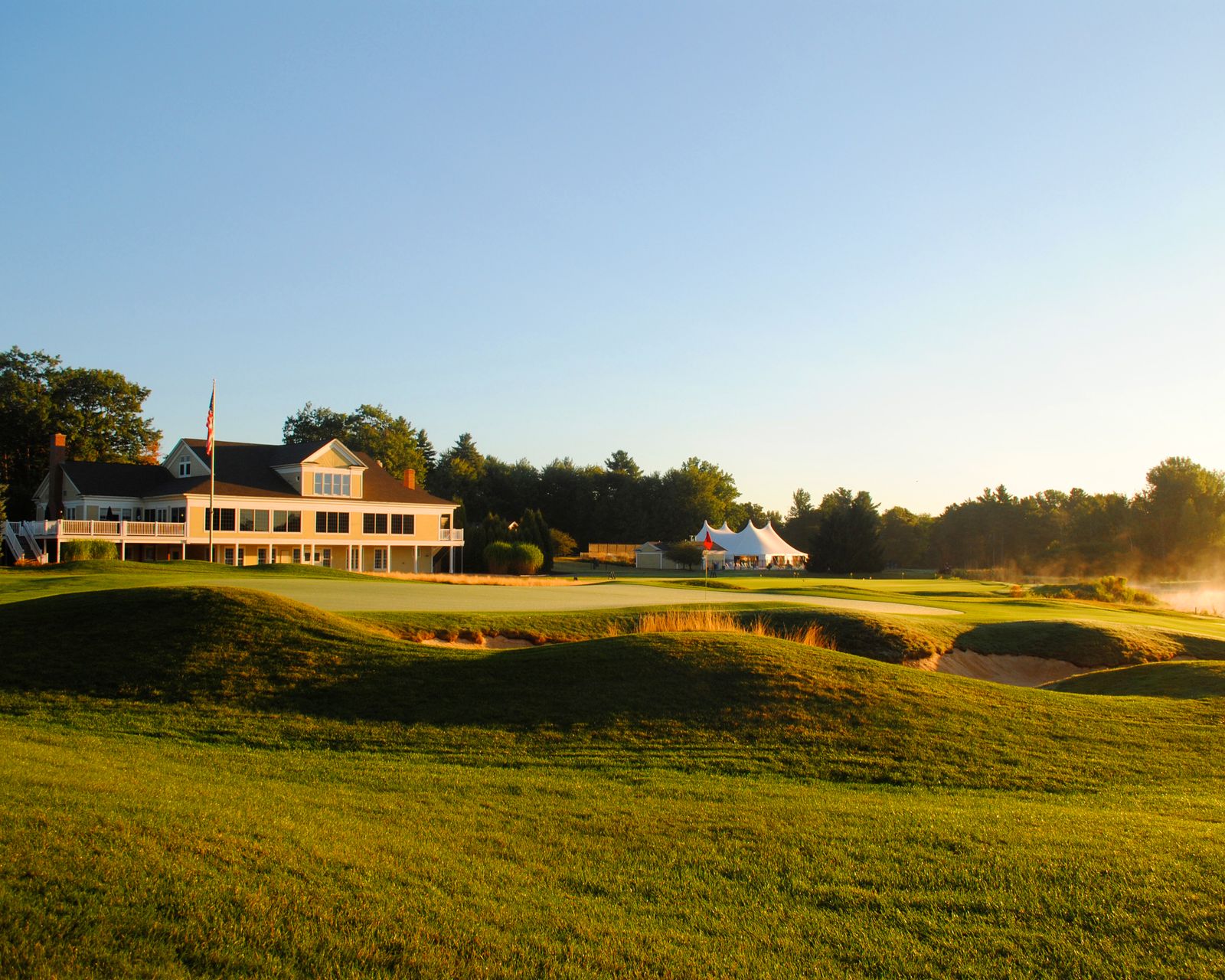
Why So Many PGA Tour Pros Live in Scottsdale — The Editorial Answer
- •Scottsdale\u2019s concentration of PGA Tour resident professionals is driven by four structural factors: practice infrastructure, year-round playable climate, Arizona\u2019s tax structure, and Sky Harbor\u2019s direct connectivity to the Tour schedule.
- •The Tour-player presence is real and well-documented, but the editorial honest stance is to treat the players as members of their communities, not as marketing assets. We do not name specific players or their addresses.
- •For the regular luxury buyer, the Tour-player concentration is interesting context but should not drive a purchase decision. Buy the community that fits your life.
If you spend any time in the practice facilities of North Scottsdale's private clubs from October through March, you will see a higher concentration of touring professionals than in any other city in the United States. The pattern is real, well-documented in golf media, and frequently cited by relocation marketers as a reason to move to Scottsdale. What is less frequently discussed honestly is why the pattern emerged, and what it actually means for the luxury real-estate market that orbits the Tour player.
This is the editorial answer. We deliberately do not name specific players or their homes. That is a privacy and editorial-honesty question, not an evasion — naming individuals' real estate is the kind of detail that has gotten other publications into trouble for inaccuracy, and the editorial work simply does not require it.
The four structural reasons Scottsdale won
Practice infrastructure at scale. A typical Tour professional needs access to a high-quality practice facility — a real driving range with multiple ball types and target depths, a full short-game area, putting greens that read like a typical Tour event surface, and ideally on-course practice in a closed-loop setting where the player can rehearse competitive situations without playing public foursomes. The North Scottsdale private clubs have collectively built more of this infrastructure than any other geographic concentration in the United States. The major exception is Jupiter, Florida, which has its own concentration of Tour residents for similar reasons.
The key word is "collectively." A Tour player is not generally a member at one club; many maintain memberships or working relationships at multiple facilities, which lets them rotate practice environments depending on what they are working on. North Scottsdale has the density to support that rotation: several elite private clubs within a fifteen-minute drive of each other, each with a slightly different practice character.
Year-round playable climate. Scottsdale averages 300+ playable days per year. The cool season (October through April) is the prime playing window — daytime temperatures in the 60s and 70s, low humidity, minimal wind on most days. The hot season is genuinely difficult, but the early-morning playable window persists even in July at the cost of starting at 5:00 a.m. The total annual playable-hour count is among the highest of any major US golf market — meaningful for a player whose game maintenance requires daily reps.
Arizona tax structure. A touring professional with multi-million-dollar annual purse and endorsement income makes residency a multi-million-dollar decision. Arizona's top marginal income tax rate is materially below California, New York, Illinois, Massachusetts, and Connecticut, and Arizona has no estate tax. For the player choosing among Tour-friendly states, Arizona, Florida, Texas, and Nevada all offer favorable structures, and Scottsdale specifically pairs the tax efficiency with the practice and climate advantages.
Sky Harbor connectivity. Phoenix Sky Harbor International is one of the better-connected airports in the western United States, with direct service to most Tour destinations and to most major endorsement-partner cities. A Tour player flies roughly weekly during the active season; the travel friction matters. From a North Scottsdale residence, the airport drive is typically 25–40 minutes depending on traffic and origin community, which is competitive with the airport access of Jupiter, Dallas, or Las Vegas residents.
The cluster effect
The structural reasons above explain why Scottsdale could win. The cluster effect explains why it kept winning. Tour players are a social cohort like any other professional class — they live near each other, train together, share trainers, share physical-therapy resources, and share information about clubs, schools, and service providers. Once a critical mass of resident professionals established Scottsdale as a Tour-friendly home base in the 1990s and 2000s, the next generation of Tour players had a built-in advantage in moving here: existing peer infrastructure, established practice networks, and a known support ecosystem (caddies, instructors, physical therapists, agents).
The equivalent cluster in Jupiter, Florida — anchored by a similar set of factors but oriented toward the East Coast Tour schedule — explains why those two cities, and almost only those two cities, have meaningful Tour residential density. Most other Tour players either live somewhere personally meaningful to them (their origin city, their wife's origin city, their college town) or have a non-Tour-clustered residence by intent.
What it means for the luxury real-estate market
The honest answer is: less than the marketing implies.
The communities that concentrate Tour residents — primarily the private-club ring in 85262 and 85266 — trade at premiums versus the broader Scottsdale luxury market. But the premium is not driven by the Tour residents themselves. It is driven by the same structural factors that attracted the Tour residents: practice infrastructure, climate, club quality, security, lot size, and architectural standards. A typical luxury buyer purchasing in those communities is buying the infrastructure, not the neighbor.
There is no measurable evidence that proximity to a specific Tour professional's home creates a transaction premium. There is no defensible claim that homes "once owned by" a specific player carry a marketing premium beyond their architectural and locational merits. When a Tour player sells their home in Scottsdale, the home transacts on its own fundamentals. The buyer pool for an $8M home with a great view, great construction, and great club access does not change because the previous owner had a green jacket.
A note on editorial honesty
Most golf-real-estate marketing in Scottsdale will name specific Tour players, describe their alleged homes, and imply or state a marketing connection. We do not do that — partially because much of it is unverifiable, partially because it intrudes on the privacy of professional players who happen to choose Scottsdale as a residence, and partially because it adds nothing to the actual buying decision for a luxury home buyer in 2026. The structural reasons Scottsdale won are interesting and useful. The personal addresses of any individual Tour player are not.
Editorial estimates only — verify with current data
Tax rules, club memberships, practice-facility access policies, and individual player residency change year to year. The patterns described above reflect the editorial state of the Scottsdale golf community as of mid-2026 and do not constitute financial, tax, or investment advice. Always verify your specific situation with appropriate licensed professionals.