Grayhawk vs DC Ranch | The 2026 Editorial Comparison
- •Grayhawk and DC Ranch share a ZIP code and a corridor but operate on entirely different golf and lifestyle models.
- •Grayhawk is daily-fee resort-style golf with a younger, more active demographic and a lower entry price point on attached homes.
- •DC Ranch pairs a private members-only country club with one of the most architecturally controlled luxury master-plans in North Scottsdale.
- •Choose Grayhawk for vibrancy, walkability, and golf without a club commitment. Choose DC Ranch for club privacy, larger lots, and a quieter year-round community.
We field this question from relocating buyers more often than almost any other community comparison in Scottsdale. Both communities are inside the 85255 ZIP, both anchored by championship golf, both within a five-minute drive of each other on the Pima/Thompson Peak corridor. From the air they look like the same kind of place. From the ground they are not.
The right answer depends on whether you want golf as a public amenity or as a private club, whether you want vibrancy or quiet, whether you have school-aged children, and whether you intend to be in residence year-round or seasonally. We will walk through each axis honestly.
The fundamental model: how each one actually works
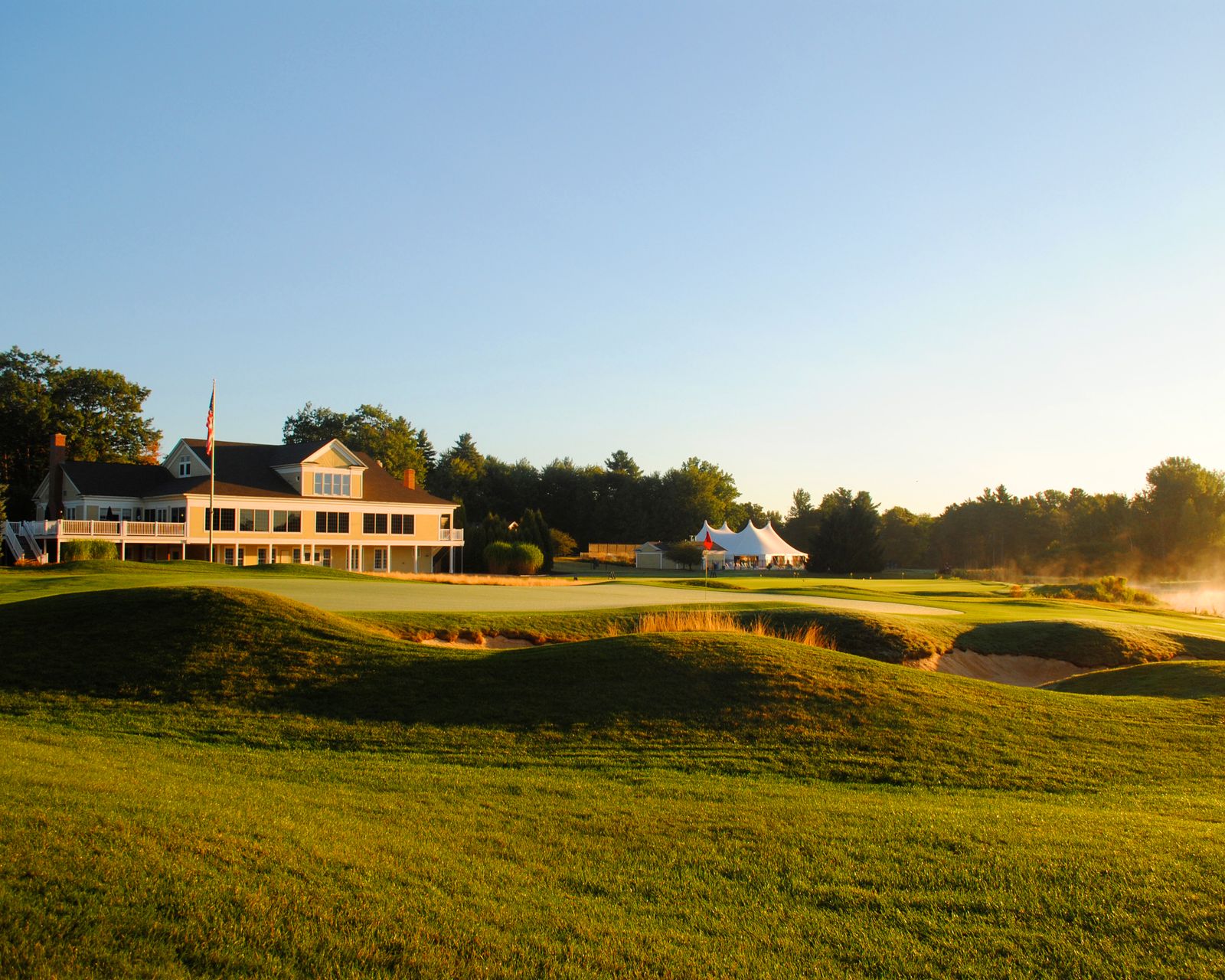
Grayhawk is a master-planned residential community built around two daily-fee public-access championship courses: the Talon (originally designed by Gary Panks and David Graham, with David Graham as the marquee architect) and the Raptor (designed by Tom Fazio). The courses are operated by Grayhawk Golf Club as a daily-fee facility — anyone can book a tee time online subject to availability, prices vary seasonally, and Grayhawk has hosted NCAA Division I championships among other elite events. The residential is organized into named villages around the courses, with a mix of attached townhomes, patio homes, and custom estates. The community is not gated; it has guarded entrances at some sub-areas but operates more openly than the prestige private-club enclaves to the north.
DC Ranch is a much larger master-plan that includes both the residential community and DC Ranch Country Club, a private members-only club anchored by two championship courses (the Sonoran and the Country Club Course). The Country Club Course is members-only; the Sonoran is technically a semi-private layout with some daily-fee access. The residential is organized around extremely tight architectural-control-committee guidelines that produce one of the most visually unified luxury master-plans in the Valley. DC Ranch also includes its own community-level amenity center (The Homestead) and a separate village center (DC Ranch Crossing) with retail and dining.
Real estate — price bands and product mix
Grayhawk\u2019s home inventory spans a wide range: from attached townhomes in the lower entry villages priced in the upper six figures, through detached single-story patio homes in the mid-to-upper seven figures, to custom estates on the larger course-front lots that transact in the multiple seven figures. The attached and patio product is what gives Grayhawk a meaningfully lower median entry point than the broader 85255 luxury market.
DC Ranch is more uniformly luxury. The lowest-priced product is typically in the mid-seven figures, the median sale is well into the upper seven figures, and the country-club-front custom estates regularly transact in the multiple eight figures. There is less attached product and almost no entry-level inventory; DC Ranch was master-planned from the beginning as a luxury-only community and the price floor reflects that.
The architectural vocabulary differs as well. Grayhawk\u2019s villages were developed by multiple builders over a longer time horizon, so the architectural variety is wider — Spanish Colonial Revival, contemporary, Tuscan, traditional, and various hybrid takes. DC Ranch enforces a tighter aesthetic register, with most homes falling into a Santa Barbara, Mediterranean Revival, or modern-organic vocabulary. The ACC review at DC Ranch is famously thorough.
Golf — daily-fee resort vs members-only club
Grayhawk\u2019s two daily-fee courses give residents and non-residents alike the same access to genuinely championship golf without a club commitment. For a homeowner, this is the major value proposition: you can play world-class golf at your home community without writing a six-figure initiation check or paying monthly dues on top of HOA. Peak-season green fees on Talon or Raptor typically run in the $200–$350 range; summer rates drop materially. If you play 40 rounds a year and you live at Grayhawk, your annual golf budget is roughly $8K–$14K — a fraction of what an equity-club member spends.
DC Ranch Country Club operates on a different economic logic. Initiation runs into the six figures (verify the current number with the membership office, as it changes); monthly dues add multiple thousand per month; and the club includes practice facilities, dining, social programming, fitness, and an array of member benefits beyond golf. The economics favor heavy users — a 60+-round-per-year player with a strong social and dining habit at the club, who values privacy and consistent pace of play.
The honest framing is that DC Ranch\u2019s golf is materially better experienced — the privacy, the pace, the conditioning of a members-only environment versus a high-volume daily-fee operation — but the cost differential is large enough that the comparison is not strictly apples-to-apples.
Schools, families, and the day-to-day rhythm
Grayhawk has historically attracted a younger demographic with school-aged children. Several of the highly-rated Scottsdale Unified and Cave Creek Unified schools serve Grayhawk\u2019s villages. The village retail centers, the proximity to DC Ranch Crossing and Promenade shopping, and the family-oriented amenity programming make Grayhawk\u2019s daily rhythm feel younger and more active.
DC Ranch skews older. Many residents are empty-nesters, late-career executives, or retirees. The community has families, and the master-plan accommodates them well, but the median household feels less child-centric than Grayhawk\u2019s. Country-club social programming tilts toward adult dining, member golf events, and lifestyle programming. The streets are quieter; the architectural register is more reserved.
HOA economics and what you actually pay
Grayhawk\u2019s HOA fee structure is village-specific. Some villages have low base HOA fees (under $200/month at the entry-level attached product); others, particularly the larger custom-estate sub-associations, carry higher monthly fees that fund private security patrols, larger common-area maintenance, and gate operation. Plan to verify the specific HOA dues for the specific home and village during diligence — the within-Grayhawk variation is wide.
DC Ranch carries a meaningful master-HOA fee that funds The Homestead amenity center, the architectural review function, the security operation, and the master-plan landscape maintenance. Sub-associations layer additional fees on top in many of the named villages. Total monthly HOA exposure for a DC Ranch homeowner typically runs into the multiple hundreds per month even without country-club dues; country-club members add the club bill on top.
Who fits Grayhawk
The young executive household. The growing family with a working professional spouse. The buyer who wants championship golf without a club commitment. The buyer optimizing for walkability to retail and dining. The buyer who wants a lower entry price point inside the 85255 ZIP.
Who fits DC Ranch
The late-career executive household. The empty-nester who wants club golf and the social programming around it. The buyer who values architectural unity and a more reserved aesthetic. The buyer who plays 60+ rounds a year and values privacy. The buyer who has the cash flow to absorb both a six-figure initiation and ongoing club dues comfortably.
The five-year hold question
A frequently underweighted factor in the Grayhawk vs DC Ranch decision is the expected hold period. The two communities have meaningfully different resale dynamics, and a buyer planning to be in the home for five years should think differently than a buyer planning to be there for twenty.
Grayhawk's broader buyer pool, lower entry price points, and more uniform liquidity across the price bands generally make a five-year resale cycle more predictable. The buyer pool refreshes regularly with new transplant households, and the community continues to attract first-time Scottsdale buyers as well as repeat regional movers.
DC Ranch is a longer-hold community by demographic structure. The median resident has been there longer; transactions are less frequent on a per-home basis; and the resale logic is calibrated to a slower turnover rate. A buyer planning a five-year hold in DC Ranch should price the home thoughtfully on the entry side; the upside on a quick exit is meaningfully narrower than the upside on a ten-or-twenty-year ownership.
For buyers genuinely uncertain about their long-term horizon, this differential matters more than the lifestyle differences. The right answer for a relocator planning to test Scottsdale for three to five years before making a longer commitment is often Grayhawk on the entry side, with a second purchase into DC Ranch (or a Tier 1 community) once the long-term residency decision is made.
The quiet question of community feel after dark
A diligence factor that most buyers overlook entirely: what does each community feel like after 9 p.m. on a Tuesday in February? Grayhawk's higher residential density, the proximity to DC Ranch Marketplace's evening dining traffic, and the daily-fee course's evening cart-path lighting produce a community that feels lived-in well into the evening. DC Ranch's lower density, wider streets, and quieter master-plan produce a community that feels more reserved after dark. Some buyers prefer the energy; others prefer the quiet. Tour both at night before deciding — the daytime experience tells you only half of what you need to know.
Editorial estimates only — verify before transacting
Club initiation fees, monthly dues, HOA fees, school assignments, and current price bands all shift annually. The comparison above is editorial and informational. Verify all specific figures, including current ARMLS comparable sales, with a licensed Arizona real-estate professional during diligence. This guide is not a representation, warranty, or guarantee of fact.