Desert Mountain, Scottsdale AZ: Where It Is, How It Began and What It Is Like
- •Desert Mountain is a private, gated golf community of about 8,300 acres at the northern edge of Scottsdale, Arizona, in the 85262 ZIP code, bordering Carefree and the Tonto National Forest.
- •Developer Lyle Anderson began the community in 1986. Members bought the club from Crescent Real Estate Holdings in 2011, and it has been member-owned since.
- •It is home to six Jack Nicklaus Signature courses and a seventh, par-54 course called No. 7 that opened in 2019.
- •Published elevation figures for the community range from roughly 2,500 to 4,500 feet, higher than central Scottsdale, which gives it a slightly milder climate and long desert views.
- •Phoenix Sky Harbor Airport is roughly 30 miles away. The towns of Carefree and Cave Creek are the nearest places for shops and restaurants outside the gate.
Desert Mountain is one of the best-known names in Arizona golf, but many people who search for it are not yet sure what it actually is. It is not a town, a single golf course or a resort. It is a private, gated, master-planned community inside the city of Scottsdale, built around a member-owned golf club with seven courses.
This overview covers the basics: where Desert Mountain is, how it came to be, what the land and climate are like, what the golf looks like at a glance, and what is nearby. If you are already thinking about buying, our Desert Mountain buyer’s guide and our guide to living in Desert Mountain go much deeper.
Important: This is general editorial information, not legal, tax or financial advice. Facts such as amenity counts, fees and rules change. Verify details with Desert Mountain Club, the community’s associations and a licensed real estate professional before you rely on them.
Where Desert Mountain is
Desert Mountain sits at the far northern edge of Scottsdale, Arizona, in the 85262 ZIP code. It borders the town of Carefree and the Tonto National Forest. The result is a community that feels far more remote than its Scottsdale address suggests.
Distances, approximately:
- Phoenix Sky Harbor International Airport: roughly 30 miles, with published drive-time estimates of about 45 to 50 minutes
- Phoenix Deer Valley Airport: roughly 17 to 18 miles, a common choice for private aircraft
- Carefree and Cave Creek: the closest towns for dining and shopping outside the gate
The community covers about 8,300 acres, according to the club. Older sources cite about 8,000 acres, a figure you will still see repeated online. Either way, it is far larger than most master-planned golf communities in the area.
How Desert Mountain began
Desert Mountain was started in 1986 by developer Lyle Anderson. Anderson had already worked with Jack Nicklaus at Desert Highlands, a Scottsdale community whose Nicklaus course opened in 1984. He went on to develop Las Campanas in Santa Fe and Loch Lomond Golf Club in Scotland.
The club describes its history as being “at one with the land” since 1986, and the community was planned to work with the desert terrain: its boulders, washes and ridgelines. That approach is a large part of why Desert Mountain still looks the way it does four decades later.
Desert Mountain grew course by course and neighborhood by neighborhood over the following decades. Ownership of the club changed hands along the way. The key moment came in 2011, when members bought the club’s six golf courses, related facilities and about 500 acres of developable land from Crescent Real Estate Holdings for a reported $73.5 million. Since then, Desert Mountain Club has been owned by its members, who elect the board that runs it.
A short timeline
- 1984: Lyle Anderson’s Desert Highlands opens its Jack Nicklaus course in Scottsdale, the start of Anderson’s work with Nicklaus.
- 1986: Development of Desert Mountain begins.
- 1990s: The Cochise course hosts The Tradition, a senior major.
- 2011: Members buy the club from Crescent Real Estate Holdings for a reported $73.5 million.
- 2012 and 2014 to 2016: Cochise hosts the PGA TOUR Champions’ Charles Schwab Cup Championship.
- 2018: The Master Association records an amendment restricting rentals of less than thirty days. A Maricopa County judge upholds it in 2019.
- 2019: No. 7 at Desert Mountain, the par-54 seventh course, opens.
- 2021: The club announces a new membership model.
The land and the climate
Desert Mountain sits higher than central Scottsdale. Published elevation figures vary by source and by location within the community, ranging from roughly 2,500 to 4,500 feet. One topographic listing places the golf course area at about 2,860 feet. For comparison, the nearby town of Cave Creek sits at roughly 2,200 feet.
That elevation brings a few practical differences:
- Slightly milder temperatures. The community generally runs a little cooler than the Valley floor, though summer is still hot.
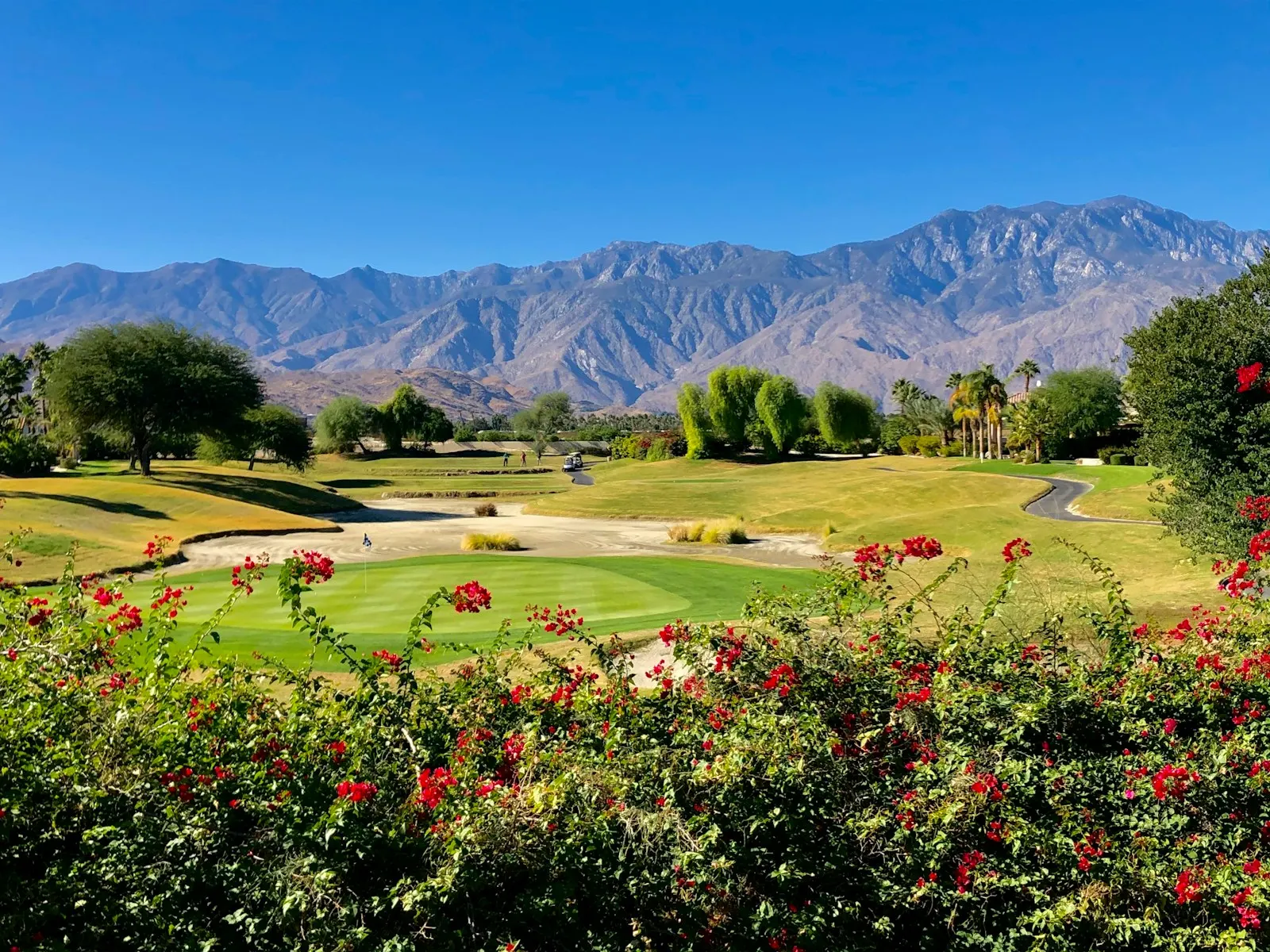
- Long views. Higher ground means wide views across the Sonoran Desert, toward the surrounding mountains and the Valley.
- Rugged terrain. Boulders, ridgelines and washes shape the land, the golf holes and the home sites.
The landscape is classic high Sonoran Desert: saguaro, palo verde, ironwood and creosote, with rock formations throughout. The club lists more than 25 miles of private hiking trails for members.
The seven courses at a glance
Golf is the center of life at Desert Mountain. The club describes its six Jack Nicklaus Signature courses as the largest private collection of Nicklaus Signature designs anywhere:
- Renegade
- Cochise, which hosted The Tradition, a senior major, in the 1990s, and the PGA TOUR Champions’ Charles Schwab Cup Championship in 2012 and from 2014 through 2016
- Geronimo
- Apache
- Chiricahua
- Outlaw
The seventh is No. 7 at Desert Mountain, a par-54 course of about 3,100 yards designed by club members Bill Brownlee and Wendell Pickett. It opened in 2019 and was built for shorter, more social rounds.
All seven courses are private. Access comes through membership in Desert Mountain Club, which is separate from owning a home in the community. Our Desert Mountain buyer’s guide covers the membership categories in more detail.
How the community is laid out
Inside the gates, Desert Mountain is divided into many separately named subdivisions, often called villages. One published profile counted 32. They are connected by a private road network and range from attached and patio homes to custom estates on large home sites. Each village has its own association, its own character and its own price range, which is why two homes at the same price can feel very different.
For a first-time visitor, the easiest way to understand the layout is by home type. Attached and patio homes, often with more exterior upkeep handled by the village association, tend to be the entry point and are popular with part-year owners. Detached homes on smaller desert lots make up the middle of the market. Custom estates on larger home sites, such as those in Apache Peak, sit at the top. Newer enclaves, including Seven Desert Mountain, add contemporary floor plans.
Elevation and views vary across the community, so a home’s position on the land often matters as much as its floor plan. Ask to see homes in several villages before you narrow your search. Our buyer’s guide explains how to compare them.
Beyond golf
By the club’s own count, the Desert Mountain campus includes seven clubhouses, ten restaurants and grills, and a racquet complex with nine tennis courts and eight pickleball courts, along with fitness and wellness facilities. Counts change as the club renovates and builds, so confirm current facilities and what your membership category includes.
The towns around Desert Mountain
Because Desert Mountain is private and largely residential, everyday life outside the gate centers on the towns nearby.
Carefree. Right next to Desert Mountain, Carefree was established as a planned community in 1955. It is known for its small-town feel, galleries, restaurants and resort setting.
Cave Creek. Just beyond Carefree, Cave Creek has a western character and a lively strip of restaurants and shops. It sits at roughly 2,200 feet, lower than much of Desert Mountain.
North Scottsdale. For larger shopping, medical care and services, residents typically drive south into North Scottsdale and the wider Phoenix area.
Schools are an important consideration for families. Real estate listings for Desert Mountain homes typically name Cave Creek Unified School District. The 85262 ZIP code crosses more than one school district, so confirm the assignment for any specific address.
How to visit Desert Mountain
Desert Mountain is a private, gated community, and its club is for members and their guests. There is no public golf and no public dining inside the gate.
If you are considering buying, the usual route is to arrange a tour through a real estate agent who works in the community or through the club’s real estate and membership contacts. A good first visit includes:
- Driving through several neighborhoods at different elevations
- Seeing at least one clubhouse
- Timing the drive to Carefree, Cave Creek and North Scottsdale
- Asking about membership categories and availability before falling for a specific home
If you can, visit twice: once during the busy season from fall through spring, and once in summer. The community feels very different in each.
Who Desert Mountain suits
Desert Mountain tends to suit people who want golf at the center of their lives, value privacy and space, and are comfortable driving for everyday errands. It tends to frustrate people who want to walk to shops and restaurants, need a short daily commute into Phoenix, or expect to use a private club only occasionally.
For a detailed look at who the community fits and who it does not, see our Desert Mountain buyer’s guide. For HOA structure, rules and annual costs, see our guide to living in Desert Mountain.
Important: Amenity counts, fees, rules and school boundaries change. Verify current details with Desert Mountain Club, the community’s associations and the school district, and consult a licensed real estate professional before making any decision.
Figures are illustrative ranges compiled from public sources and change with the market. Verify current pricing, dues and fees with a licensed Arizona real estate professional or directly with the club.